
Design Education in India: Understanding the Landscape of Leading Design Institutions
- desizn circle International
- May 31
- 6 min read
We have written this as an editorial-style article rather than a ranking, so it reads professionally and avoids implying that one college is "better" than another. The names in this list is not based on any rankings .
India's design education ecosystem has undergone a remarkable transformation over the past two decades. What was once considered a niche career option has evolved into one of the most dynamic and interdisciplinary fields, influencing industries ranging from technology and fashion to healthcare, mobility, sustainability, entertainment, communication, and entrepreneurship.

Today, design is no longer limited to creating products or visual identities. Designers are helping solve complex social, environmental, technological, and business challenges. As India's creative economy continues to grow, design institutions across the country are playing a critical role in preparing students for this rapidly changing world.
Rather than looking at design colleges through the lens of rankings, it is more meaningful to understand their individual philosophies, strengths, and educational approaches. Every institution contributes uniquely to India's design ecosystem, and the best choice often depends on a student's interests, aspirations, learning style, and career goals.
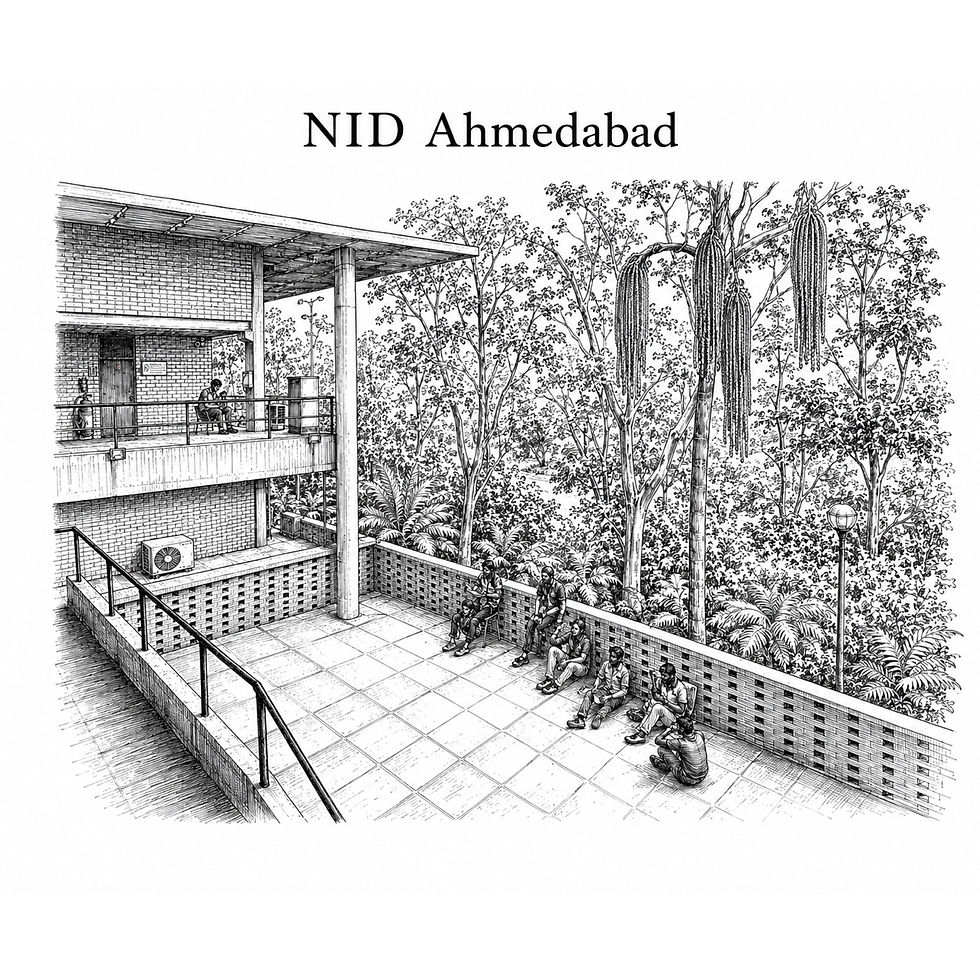
National Institute of Design (NID)
NID has long been regarded as one of India's most influential design institutions. Established with the vision of creating a design culture in independent India, it continues to be known for its strong emphasis on design thinking, user-centred innovation, research, and interdisciplinary learning.
Students are encouraged to explore design as a problem-solving discipline while working across Product Design, Communication Design, Animation, Film, Textile Design, Furniture Design, Exhibition Design, and several emerging fields.
The NID pedagogy places significant emphasis on observation, experimentation, prototyping, and process-driven thinking.
National Institute of Fashion Technology (NIFT)
While NIFT is widely known for fashion education, its scope extends far beyond apparel design. Over the years, it has developed into one of India's largest creative institutions offering programmes in Fashion Design, Communication Design, Fashion Communication, Accessory Design, Textile Design, Knitwear Design, Leather Design, Fashion Technology, and Fashion Management.
NIFT combines creative exploration with industry relevance and maintains strong relationships with the fashion, retail, luxury, and lifestyle sectors.
Its multidisciplinary environment allows students to understand both the creative and business dimensions of design.

IITs – Design Programmes
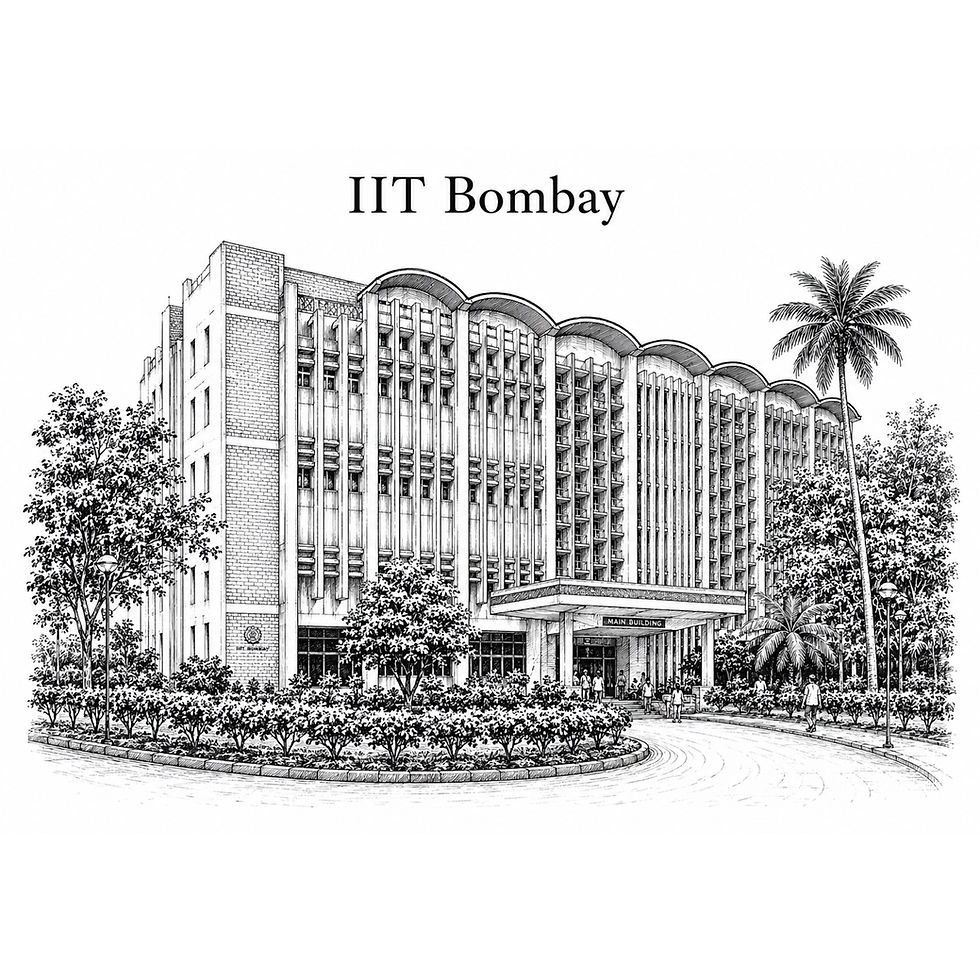
Institutions such as IIT Bombay, IIT Delhi, IIT Guwahati, IIT Hyderabad, and several others have expanded their focus on design education through dedicated design departments and schools.
The IIT approach often combines design with engineering, technology, innovation, research, and entrepreneurship. Students benefit from exposure to cutting-edge technology, interdisciplinary collaboration, and strong industry partnerships.
For those interested in Product Design, Human-Centred Design, Interaction Design, User Experience Design, and Design Research, the IIT ecosystem provides a unique blend of technical and creative learning.
UID Ahmedabad (Unitedworld Institute of Design)
UID has emerged as one of the country's largest multidisciplinary design institutions, offering programmes across Product Design, Transportation Design, Fashion Design, Interior Design, Animation, Visual Communication, and several emerging specialisations.
The institution places strong emphasis on industry collaborations, international exposure, workshops, and experiential learning.
Its broad range of disciplines allows students to interact with diverse creative practices under one academic ecosystem.

UDIT , Gurugram (Formerly IIAD)
UDIT has established itself as a contemporary design institution with a strong emphasis on studio culture, interdisciplinary practice, and international collaborations.
The institution encourages students to work across Fashion Design, Communication Design, Interior Architecture, Product Design, and emerging creative disciplines.
A project-based approach, combined with strong industry engagement, helps students build professional portfolios throughout their academic journey.

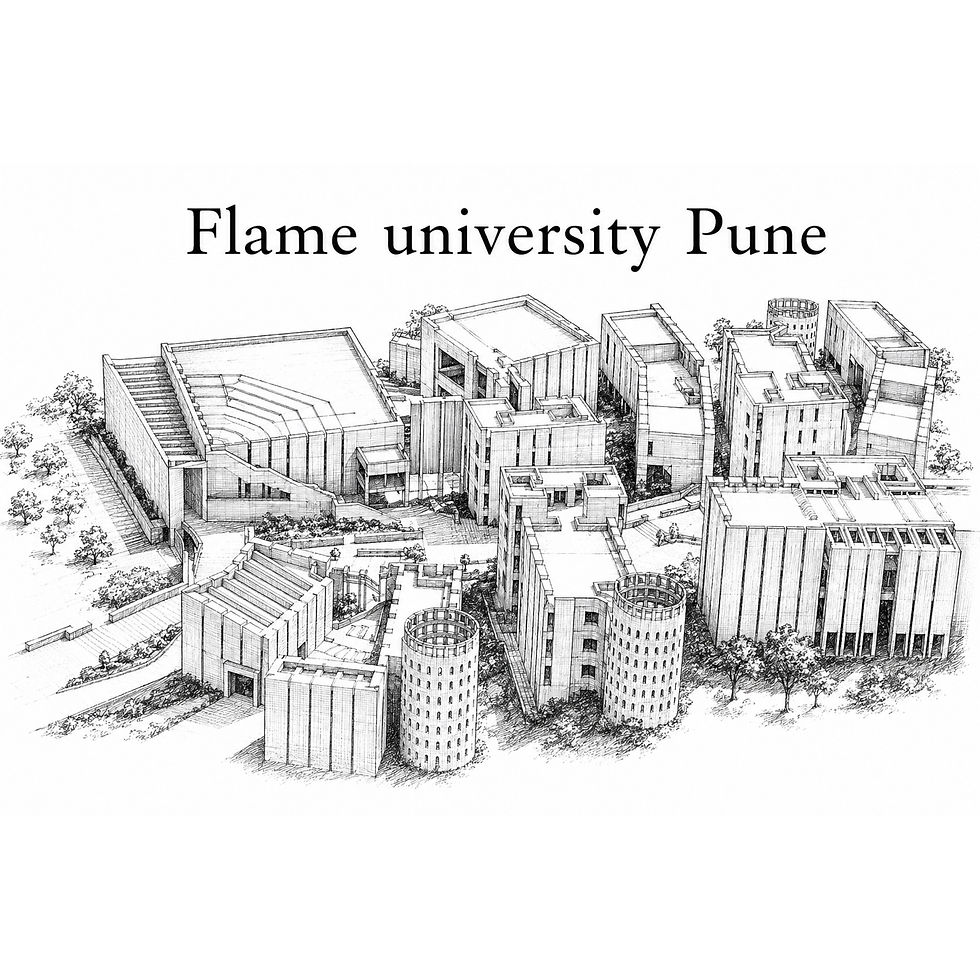
FLAME University , Pune
FLAME offers a distinctive liberal education model that combines design with broader exposure to humanities, business, social sciences, technology, and creative practice.
Students benefit from interdisciplinary learning and the flexibility to explore multiple interests before specialising.
The university's approach reflects the growing importance of designers who can think beyond traditional disciplinary boundaries.
BITS Design School, Mumbai
As one of the newest entrants in India's design education landscape, BITS Design School seeks to integrate design, technology, innovation, entrepreneurship, and systems thinking.
Its curriculum is built around future-focused design education and prepares students for emerging fields such as Experience Design, Strategic Design, Digital Product Design, and Innovation Leadership.
The institution represents a new generation of design schools responding to the changing demands of the creative economy.

Istituto Marangoni Mumbai
Istituto Marangoni brings a global perspective to Indian design education through its strong legacy in fashion, luxury, and creative industries.
The institution offers students exposure to international methodologies, industry professionals, and global design networks.
Programmes are particularly attractive to students interested in Fashion Design, Fashion Styling, Fashion Business, Luxury Brand Management, and Creative Direction.

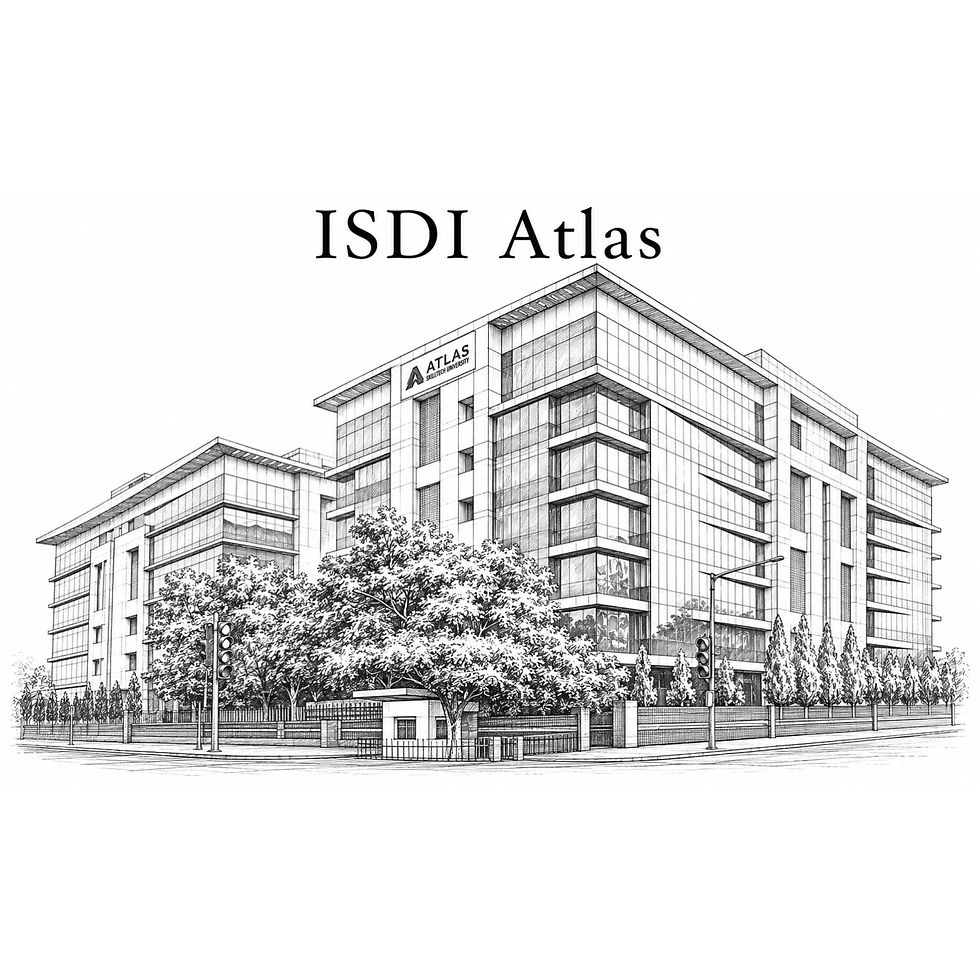
ATLAS ISDI
ATLAS ISDI has built a reputation for contemporary design education rooted in global practices and industry collaboration.
The institution offers programmes across Communication Design, Fashion Design, Product Design, Interior Design, Strategic Design Management, and several emerging disciplines.
Its focus on design innovation, entrepreneurship, and industry immersion prepares students for a rapidly evolving creative landscape.
Pearl Academy (Delhi , Mumbai , Bengaluru , NCR)
Pearl Academy has played a significant role in shaping India's private design education sector.
Known for its strong industry integration, Pearl offers programmes in Fashion Design, Fashion Communication, Product Design, Interior Design, Styling, Media, Business, and Luxury Management.
The institution emphasises hands-on learning, live projects, internships, and professional exposure throughout the student journey.

The Design Village (TDV) , Noida & Italy
The Design Village has developed a unique identity through its emphasis on design thinking, innovation, experimentation, and future-focused learning.
The institution encourages students to engage with social challenges, entrepreneurship, sustainability, and interdisciplinary collaboration.
Its growing international partnerships and global initiatives continue to expand opportunities for students interested in contemporary design education.

Ecole Intuit Lab, Delhi
Ecole Intuit Lab brings a unique international perspective to design education in India through its French roots and global design philosophy. Originally established in Paris, the institution has built a strong reputation for fostering creativity, strategic thinking, visual communication, and industry-focused learning.
The school is particularly known for its emphasis on Graphic Design, Visual Communication, Digital Design, Motion Design, User Experience Design, and Creative Strategy. Its curriculum encourages students to combine conceptual thinking with practical application, preparing them for the rapidly evolving creative industries.

The Future of Design in India
India stands at a fascinating moment in its design journey.
As technology, sustainability, artificial intelligence, mobility, healthcare, urbanisation, and digital transformation reshape industries, designers are increasingly becoming strategic problem-solvers rather than purely visual creators.
The future will require professionals who can combine creativity with empathy, research, systems thinking, technology, and entrepreneurship.
Fields such as:
• User Experience Design (UX/UI)• Service Design• Design Research• Product Innovation• Strategic Design• Sustainable Design• Fashion Technology• Experience Design• Creative Technology• Digital Media and Animation
are expected to witness substantial growth in the coming decade.
Design education is therefore becoming increasingly interdisciplinary, requiring students to develop both creative and analytical capabilities.
Understanding the Entrance Examinations
One of the most common misconceptions among students is that design entrance examinations primarily test drawing skills.
In reality, modern design entrance exams assess a much broader range of abilities.
Students are evaluated on:
• Observation skills• Creativity and originality• Problem-solving ability• Visual communication• Logical reasoning• Design awareness• Spatial understanding• Critical thinking• Storytelling and ideation
Institutions such as NID, NIFT, and IITs have developed highly competitive selection processes that assess a student's aptitude for design rather than technical drawing perfection.
How Difficult Are These Examinations?
Design entrance examinations are among the most misunderstood competitive examinations in India.
Unlike traditional academic tests, there is often no fixed syllabus. Students are expected to think creatively under time pressure while demonstrating originality and problem-solving ability.
The challenge lies not only in generating ideas but also in communicating them effectively through sketches, diagrams, visual narratives, and written explanations.
For highly sought-after institutions such as NID, NIFT, and IIT Design programmes, competition remains intense because of the limited number of seats and the increasing awareness of design as a career.
Success often depends less on natural talent and more on consistent practice, observation, portfolio development, and exposure to design thinking.
Choosing the Right Design College
There is no single "best" design college in India.
Each institution offers a different perspective on creativity, design practice, industry engagement, and learning culture.
Students should evaluate:
• Academic philosophy• Faculty expertise• Industry connections• Campus culture• Specialisations offered• International exposure• Studio environment• Career aspirations
The right institution is the one that aligns with a student's interests, ambitions, and personal learning style.
Ultimately, design education is not merely about obtaining a degree. It is about developing the ability to observe the world differently, ask better questions, solve meaningful problems, and create positive impact through design.
The future of design in India is incredibly promising, and the institutions discussed above continue to play an important role in shaping the next generation of creative thinkers, innovators, and leaders.
(Few names of the colleges are missing since we do not have rights to use their names and logo's)


Comments